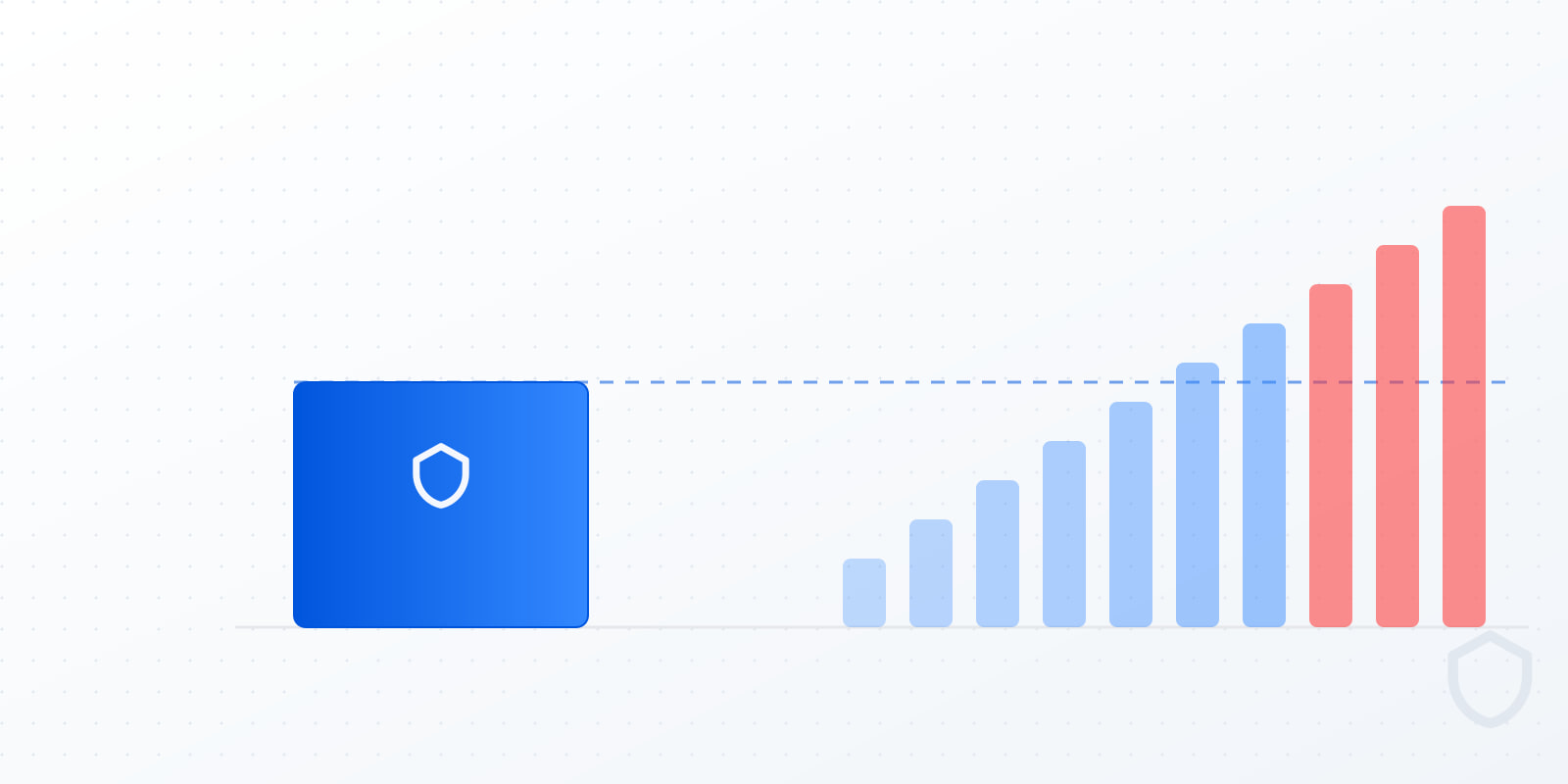
In Ontario, expect $300–$800 for a basic DIY kit, $1,500–$5,000 for a professionally installed system, and $10–$60 a month on top if the system requires a subscription. That last number is the one that decides what you actually pay, and it is the one quoted least clearly.
Here is the full picture, including ours.
The four costs, separated
Most quotes blur these together. Pull them apart before comparing anything.
- Hardware — the hub, cameras, sensors, locks. A one-time cost, though some companies finance it into a contract so it stops looking like one.
- Installation — mounting, wiring, network configuration, commissioning. Either a line item or "free" and recovered through the monthly fee.
- Subscription — monitoring, cloud storage, and/or feature unlocks. Ongoing, and usually adjustable by the company rather than by you.
- Maintenance — batteries, the occasional drive, a service call. Small, real, and almost never mentioned at the quote stage.
A "free installation with a 36-month agreement" is not free. It is financing, priced into the monthly figure.
The ten-year arithmetic
This is the calculation nobody does before signing, and it is not close.
| Subscription system | One-time system | |
|---|---|---|
| Up front | $0–$500 (often financed) | $1,500–$4,500 |
| Monthly | $10–$60 | $0 |
| Over 10 years | $1,200–$7,200 in fees | $0 in fees |
| Total, 10 years | $1,200–$7,700 | $1,500–$4,500 |
| Own the hardware at the end | Sometimes | Yes |
| Keep your recordings | Only while you keep paying | Always |
The subscription looks cheaper for roughly the first two to three years. After that it is simply more expensive, and it never stops being more expensive.
Two details that make the gap worse than the table shows:
- The fee is not fixed. It is set by a company that knows switching means re-wiring your house. Ten years is long enough for several increases.
- Stopping payment can cost you your history. With cloud storage, the recordings are on their servers. Cancel and, depending on the provider, the footage goes with the account.
Why systems charge monthly at all
Two reasons, and only one of them is about you.
The legitimate one: monitoring. A staffed centre watching for alarms twenty-four hours a day is a real service with real payroll behind it. Paying for it is reasonable, and if you want it, it should be a line you can see.
The structural one: cloud costs. If a company stores your video and runs AI analysis on their servers, every camera you own is an ongoing bill for them — storage, bandwidth, compute, every hour of every day. That bill has to be passed to you, which is why the fee never ends. It is not greed; it is the architecture.
Which is the reason a locally-processed system can honestly charge nothing monthly. When the AI runs on hardware in your utility room and the video is written to a drive in your house, there is no recurring cost for us to recover.
What NoBreak costs
One-time, hardware and professional installation included:
| Tier | Price | Covers |
|---|---|---|
| Starter | $1,499 | Brain Box (Beelink EQR6) + setup, up to 8 sensors / 2 cameras, dual-AI detection, end-to-end encryption, push notifications, mobile dashboard |
| Professional | $2,499 | Everything in Starter, up to 24 sensors / 5 cameras, Frigate NVR + Scout AR room scanning, CyberPower UPS included, 2 years of support |
| Elite | $4,499 | Everything in Professional, up to 72 sensors and 12 cameras, smart home integration, priority 24/7 support, annual system health check |
$0 a month. AI detection, alerts and recording all run locally, software updates are included, and every feature works from day one — there is no premium tier and no paywall between you and your own footage.
Professional monitoring is coming as an optional add-on. The system is fully functional without it. If a staffed monitoring centre is a requirement for you today, tell us on the call and we will say so plainly rather than sell you around a date.
The add-ons, with real prices
So you can build a realistic budget rather than discover these later:
| Schlage Encode Plus smart lock | $449 installed |
| Yale Assure Lock 2 | $349 installed |
| Reolink PoE video doorbell | $199 installed |
| Amcrest AD410 doorbell | $149 installed |
| Ecobee smart thermostat | $349 installed |
| Stelpro Maestro (baseboard heat) | $149 per room, installed |
| Smart smoke / CO detector | $29 each, installed |
| Water leak sensor | $24.99 each |
| Shelly EM whole-home energy monitor | $69.99 installed |
| Emporia Vue circuit-level monitoring | $199 installed |
| NFC Tap Tags | 3 free with every system; Family Pack $29.99, Pro Pack $49.99 |
The Stelpro one is specifically an Ontario answer: most homes here run baseboard heat, which the popular smart thermostats do not handle, and per-room control is where the actual savings are.
What drives your number up or down
- Camera count, more than anything else. Each one is hardware plus a run of cable plus storage.
- Wired versus wireless. PoE cameras cost more to install and are more reliable, with no batteries to replace. Wireless is cheaper on day one and more annoying every year after.
- The size and shape of the house. A three-storey with a detached garage is a different cabling job from a bungalow.
- What you already own. ONVIF cameras, Zigbee and Z-Wave sensors and WiFi devices often carry over. We assess yours during a free pre-install consultation — reusing working equipment is usually the single largest saving available.
What to ask for in any quote
- The ten-year total, not the monthly figure.
- What happens if you stop paying — does the hardware keep working, and do you keep your recordings?
- Whether installation is genuinely free or financed into the contract.
- The contract length and the cancellation penalty.
- Whether the price is locked or can be raised at their discretion.
- What your existing equipment can be reused for.
Any company that will not answer all six in writing has told you something useful.
The honest caveats
Local storage means a drive to replace eventually. Drives fail; ours are no exception. It is a maintenance item rather than a surprise, we handle it, and you should budget for it existing.
A one-time purchase is a larger cheque on day one. That is genuinely harder if cash flow is the constraint, and it is a fair reason to choose otherwise. Just make the choice knowing the ten-year number rather than the monthly one.
Book a free 15-minute call and we will assess your home, tell you what of your existing kit works, and give you a real number. Toronto and the GTA. No pressure.
Frequently asked questions
How much does a home security system cost in Ontario? Roughly $300–$800 for a basic DIY kit and $1,500–$5,000 for a professionally installed system, plus $10–$60 a month if a subscription is required. NoBreak is $1,499, $2,499 or $4,499 one-time with hardware and installation included and no required monthly fee.
Is a subscription or a one-time purchase cheaper? A subscription is cheaper for the first two to three years and more expensive every year after. Over ten years, $10–$60 a month totals $1,200–$7,200 in fees on top of the hardware, and the fee can be raised at the company's discretion.
Why do security companies charge monthly? Two reasons: staffed monitoring is a genuine ongoing service, and cloud storage plus cloud AI cost the company money continuously, so that cost gets passed on. A system that processes and stores locally has no recurring cost to recover.
Do I need professional monitoring? Not necessarily. Self-monitored systems alert you directly with no contract and no third party in the loop. Monitoring adds value if you are frequently unreachable or want a staffed response — NoBreak's is coming as an optional add-on.
What is included in a NoBreak installation? The Brain Box and its setup, your sensors and cameras connected and configured, the mobile dashboard, dual local AI detection and end-to-end encryption — all in a single visit. Professional and Elite tiers include two years of support.
Can I reuse my existing cameras? Often yes. Most ONVIF IP cameras, Zigbee sensors, Z-Wave sensors and WiFi devices work, and we assess what you have during a free pre-install consultation. Reusing working equipment is usually the biggest single saving available.